
About us
We are an interdisciplinary consortium working at the intersection of environmental microbiology, genomic surveillance, public health, and antimicrobial resistance. Our goal is to develop scalable wastewater-based surveillance frameworks and contribute to knowledge about AMR in a one health context to generate actionable insights for policy and intervention.
Our team integrates expertise in
- Environmental microbiology
- Clinical AMR surveillance
- Genomics and metagenomics
- Data science and modelling
- Public health policy
- One Health surveillance
Through collaborative research and data integration, we aim to strengthen environmental AMR monitoring and to build evidence-based strategies to mitigate antimicrobial resistance.
CONSORTIUM MEMBERS
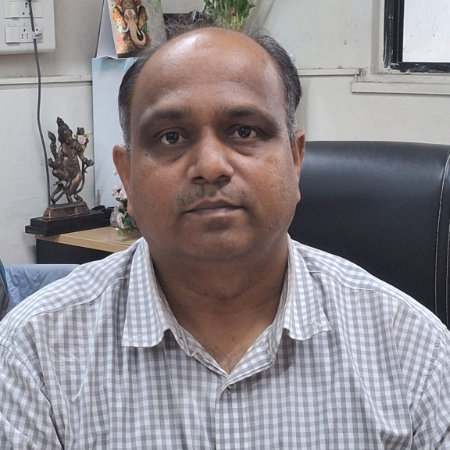
Dr. Mahesh Dharne
Dr. Mahesh S. Dharne is a Senior Principal Scientist at the CSIR–National Chemical Laboratory (NCL) in Pune, where he works with the National Collection of Industrial Microorganisms (NCIM). His research focuses on environmental microbiology, microbial genomics, and metagenomics, with a particular emphasis on understanding microbial diversity and its implications for antimicrobial resistance (AMR). By studying microbial communities across diverse environments, Dr. Dharne’s work contributes to a deeper understanding of how environmental ecosystems influence the emergence and spread of antibiotic resistance.
A major component of Dr. Dharne’s research examines environmental reservoirs of antimicrobial resistance. His group investigates microbial communities present in rivers, wastewater systems, soils, and other ecological niches to identify antibiotic-resistant bacteria and resistance genes circulating outside clinical settings. Using advanced genomic and metagenomic tools, his research helps map how resistance genes persist and move through environmental systems, potentially contributing to the spread of AMR in human and animal populations.
Dr. Dharne has also been involved in environmental surveillance initiatives that monitor antimicrobial resistance through wastewater and other environmental samples. By studying antibiotic-resistant organisms such as resistant strains of Escherichia coli in sewage treatment systems and urban water bodies, his work highlights the role of environmental monitoring in detecting emerging resistance trends. These approaches complement clinical surveillance and provide a broader picture of how resistance evolves and circulates at the community level.
Beyond surveillance, Dr. Dharne’s research explores the functional potential of environmental microbiomes, including the discovery of novel microbes and bacteriophages that may produce antimicrobial compounds. By integrating microbial ecology, genomics, and public health perspectives, his work supports a “One Health” understanding of antimicrobial resistance, connecting environmental ecosystems, microbial evolution, and human health.
Through interdisciplinary research and environmental monitoring, Dr. Dharne’s work contributes to strengthening environmental AMR surveillance and advancing strategies to better understand, predict, and mitigate the spread of antimicrobial resistance.
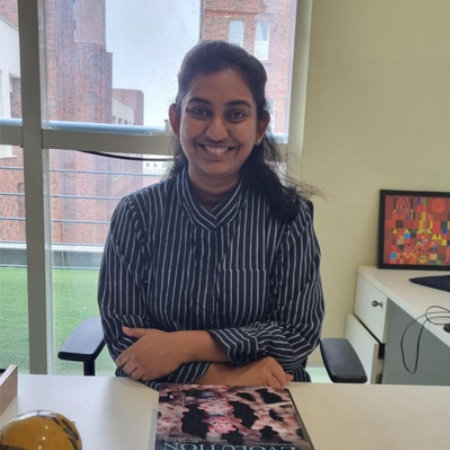
Dr. Laasya Samhita
Dr. Laasya Samhita is an Assistant Professor of Biology at Ashoka University whose research lies at the intersection of molecular biology, evolutionary biology, and public health. Her work focuses on understanding the mechanisms and ecological pathways that drive antimicrobial resistance (AMR), with a particular emphasis on how environmental factors contribute to the emergence and spread of resistant pathogens.
Dr. Samhita’s research addresses a critical gap in global AMR science: the connection between environmental reservoirs of antibiotic resistance, laboratory studies of resistance and clinical infections. Environmental sources such as wastewater, rivers, and soil often contain bacteria and resistance genes that can circulate back into human populations. By studying these systems, her work seeks to reveal how resistance evolves and moves between ecological and clinical contexts.
A key focus of her lab is the investigation of AMR evolution in the environment. Through systematic sampling of wastewater and other environmental sites, her team tracks the presence and evolution of antibiotic-resistance genes over time. This research aims to build spatio-temporal datasets that map patterns of resistance in the environment, helping scientists and policymakers anticipate emerging threats and improve antibiotic stewardship strategies.
Dr. Samhita also investigates molecular mechanisms underlying antibiotic resistance. Her research explores how cellular processes, such as errors during protein synthesis (mistranslation), can influence bacterial adaptation and survival under antibiotic stress. By combining molecular biology, genetics, experimental evolution, and genomic analyses, her work provides insights into how bacteria rapidly develop resistance in changing environments.
She is also involved in collaborative initiatives linking environmental and clinical AMR data. In one such project supported by the World Health Organization’s International Pathogen Surveillance Network (IPSN), Dr. Samhita and collaborators are developing DNA barcoding-based methods to quantitatively map the relationship between environmental resistance genes and clinical infections. These approaches aim to enable scalable surveillance systems that can inform public health policy and strengthen global responses to AMR.
Through interdisciplinary collaborations and genomic surveillance, Dr. Samhita’s work contributes to a deeper understanding of how antimicrobial resistance emerges, evolves, and spreads across ecosystems. By connecting environmental monitoring with clinical data and evolutionary biology, her research seeks to develop evidence-based strategies to predict, monitor, and ultimately mitigate one of the most pressing public health challenges of our time.
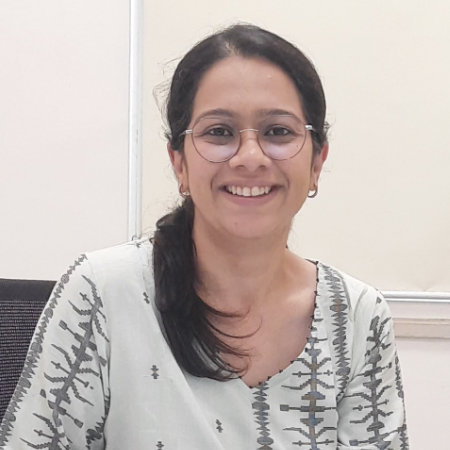
Dr. Shraddha Karve
Dr. Shraddha Karve is an Assistant Professor (Research) at the Ashoka University, where she is affiliated with the Koita Centre for Digital Health and the Trivedi School of Biosciences. Her research focuses on understanding and combating Antimicrobial Resistance, one of the most pressing global public health challenges.
Dr. Karve’s work investigates how bacteria evolve resistance to antibiotics and how these patterns can be detected, predicted, and ultimately mitigated. Her group studies antimicrobial resistance in clinical isolates from tertiary healthcare centers using genomic and computational approaches, combined with laboratory evolution experiments to understand how resistance emerges and spreads.
Her research integrates clinical data, genomics, and data science to better understand the molecular and environmental factors that influence the evolution of resistant pathogens. By analysing genomic sequences and hospital surveillance data, her team aims to uncover the genetic mechanisms behind resistance and improve tools for monitoring and predicting AMR trends.
A major component of Dr. Karve’s work involves clinical surveillance of antimicrobial resistance across hospitals in India. Through collaborations with healthcare centres, her team analyses laboratory and antibiogram datasets to identify resistance patterns in pathogens and to track how these patterns change over time.
Her research also explores how environmental and climatic factors influence resistance trends. For example, her team has studied correlations between resistance patterns and variables such as temperature and precipitation, demonstrating the importance of taking a holistic, system-level view of antimicrobial resistance rather than focusing only on individual drug-bacteria combinations.
Dr. Karve has received several recognitions for her contributions to AMR research. She was awarded the Indian National Science Academy (INSA) Young Scientist Award in 2020, recognising her work on microbial evolution and resistance.
Her team also won the Innovation Award at the Vivli AMR Global Data Challenge, where they analysed large surveillance datasets to uncover trends linking environmental factors, such as air pollution, to antifungal resistance. This work highlighted the importance of long-term data analysis for understanding the dynamics of antimicrobial resistance.
Through interdisciplinary research combining microbiology, genomics, and computational analysis, Dr. Karve aims to improve AMR surveillance, diagnostics, and predictive models. Her work contributes to building evidence-based strategies for combating antimicrobial resistance and strengthening global health systems against drug-resistant infections.
What We Do
Our work focuses on building comprehensive wastewater-based AMR surveillance systems that connect environmental data with clinical outcomes and policy action.
Our core activities include:
- Using wastewater sampling as a tool to understand environmental AMR
- Identification of novel AMR and bacteria-AMR associations
- Tracking resistant bacterial strains and communities
- Building/employing novel experimental and informatics tools for in-depth analysis of AMR
- Quantification of antibiotic resistance genes
- Linking environmental and clinical AMR data
- Developing genomic surveillance pipelines
- Policy translation and stakeholder engagement